
Coming Soon 1Q 2027
semaiASSETS
Material Master Data Management and Cataloguing
One material catalogue across entities: every item that is bought, stored and used gets one record, written the same way everywhere, so the same item is recognised as the same item in every warehouse. AI is used as a tool to clean up the material data; a person decides every proposal.
For the complete view, open this on a laptop, PC or tablet.
What semaiASSETS Does
Material master is one record for every item that is bought, stored and used: name, unit, manufacturer's number, material group. Procurement, warehouse and maintenance read the same record. The catalogue is the rule for writing it: a noun that names the item, a modifier that narrows it, then attributes in a fixed order and the manufacturer's number.
Cleansing Workbench
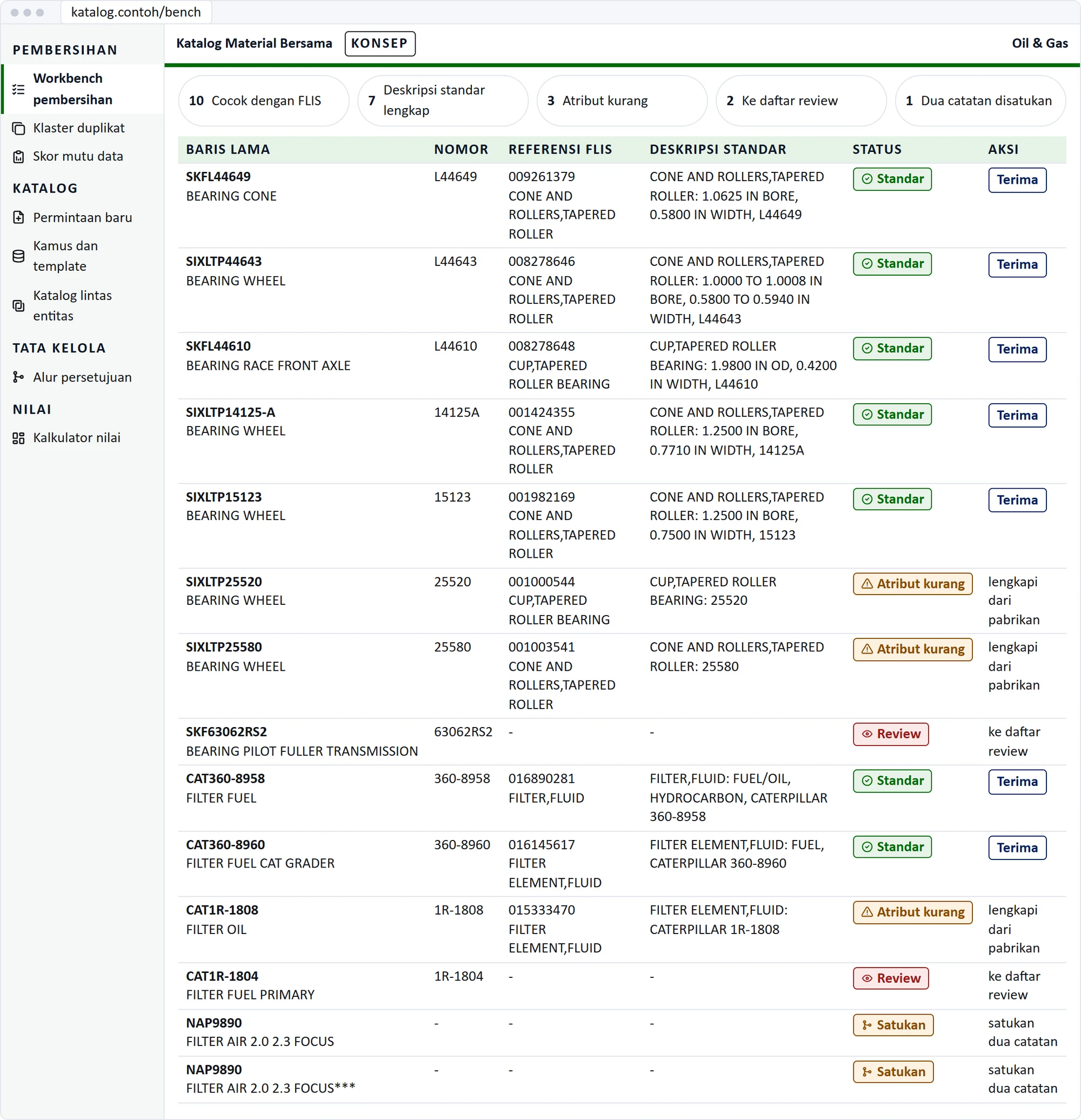
Reads every old line, takes the manufacturer's number out of it, matches it to a reference and writes the standard description from the reference values.
AI as a Tool
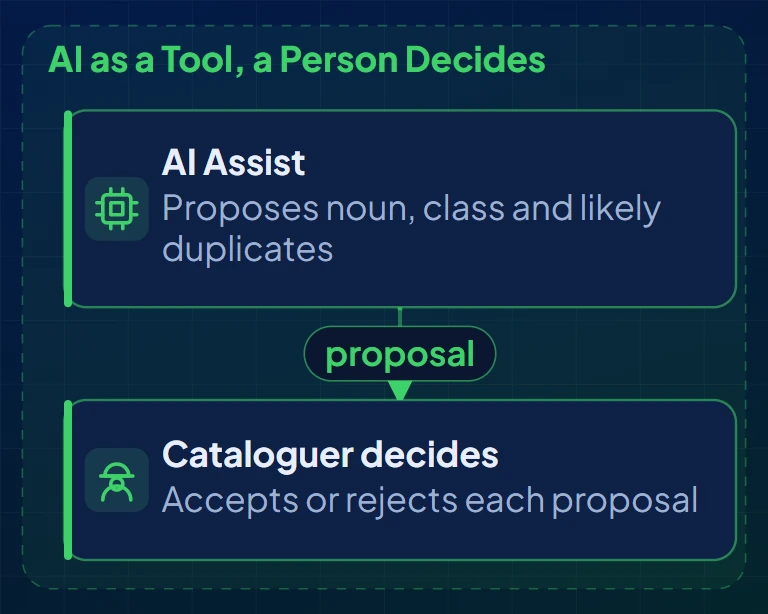
AI proposes a noun, a class or a likely duplicate. A cataloguer accepts or rejects each proposal, and every value keeps its source: manufacturer, web page, physical check or model.
Duplicate Clusters
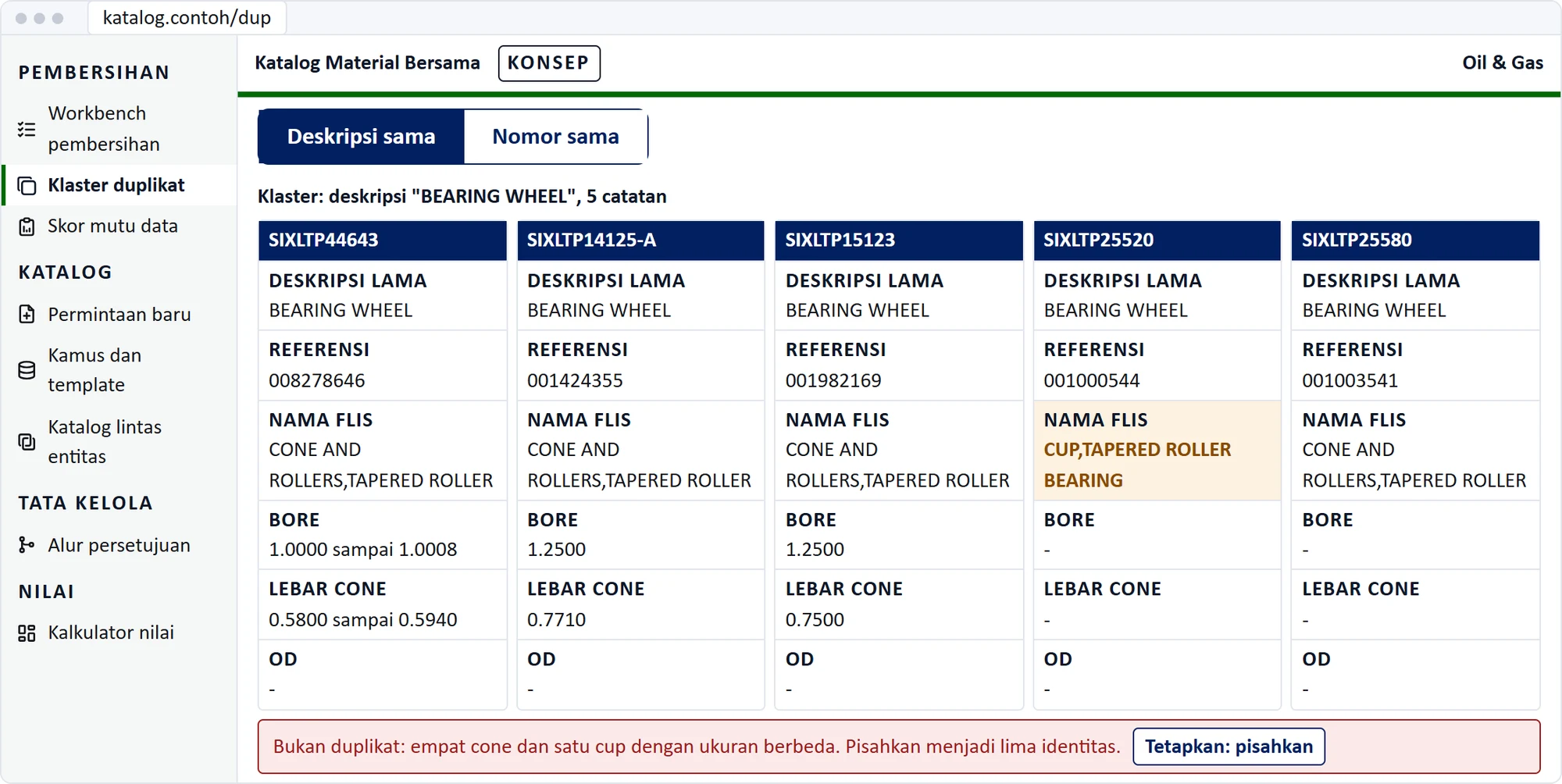
Look-alike records are grouped and compared side by side. The reference values decide, not the look of the text: lines without a reference go to review, never a guess.
Shared Dictionary and Templates
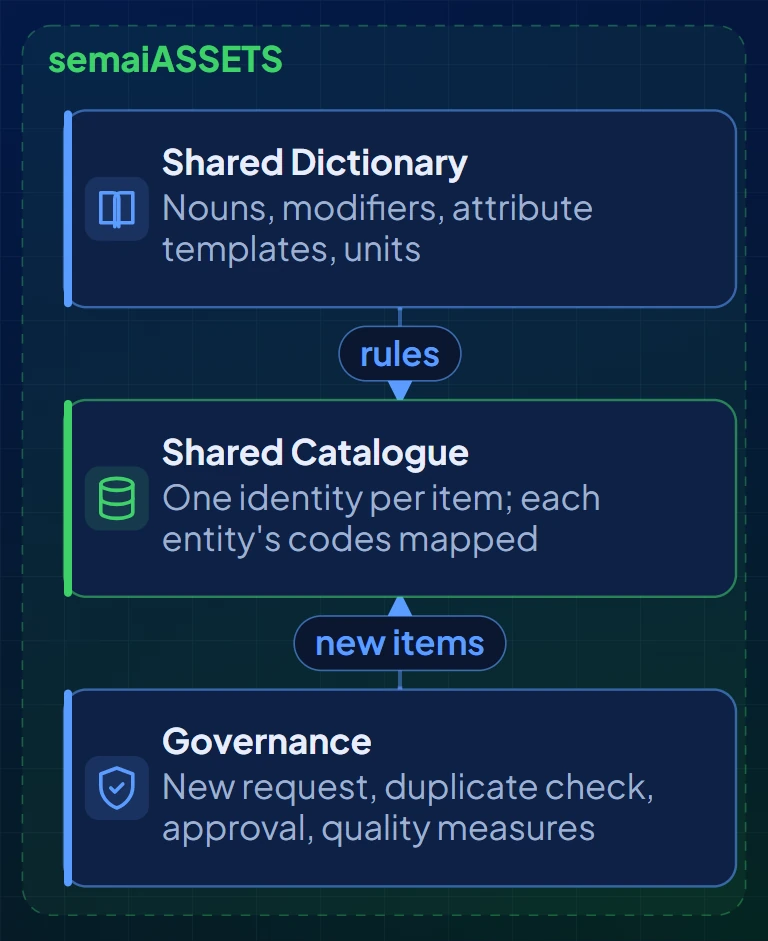
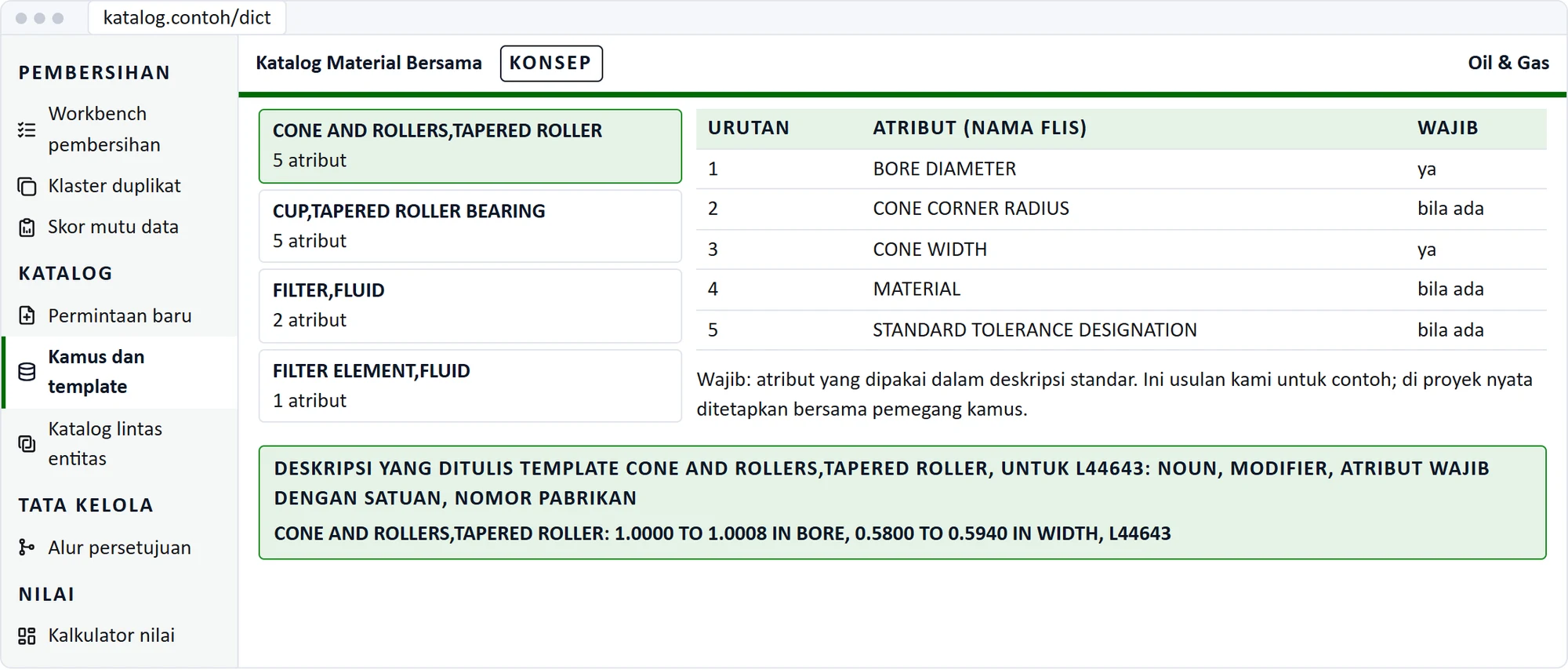
Approved noun and modifier pairs, each with its attribute template in a fixed order, plus units and abbreviations, aligned with international cataloguing standards.
One Catalogue Across Entities
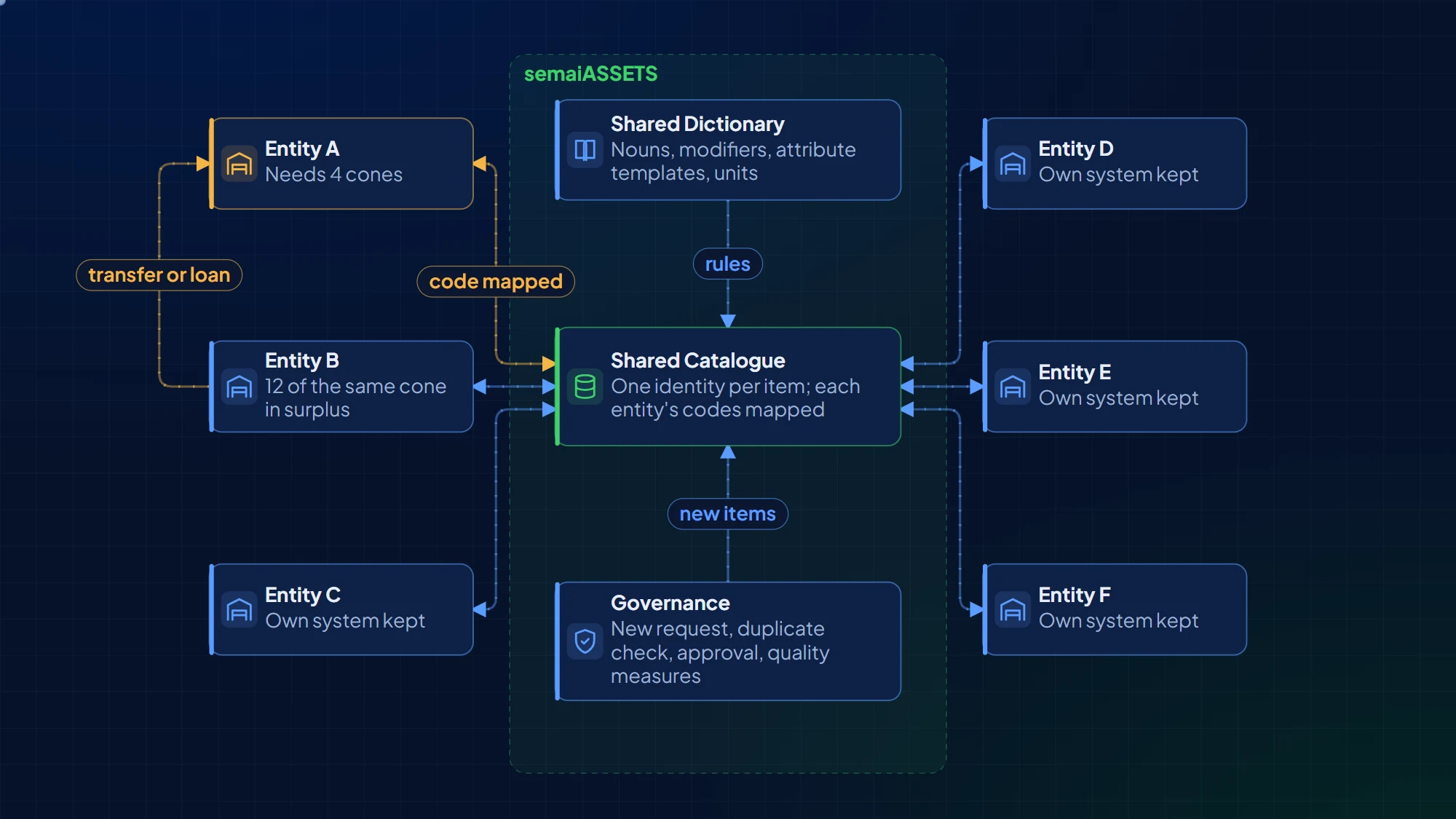
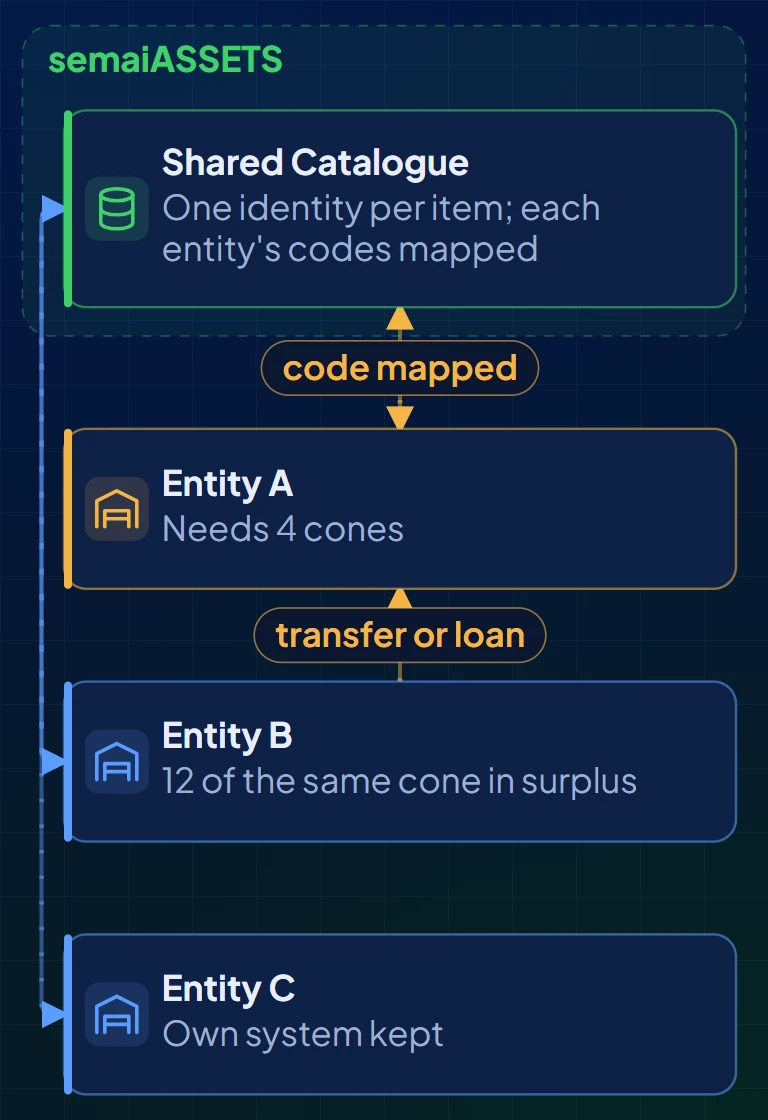
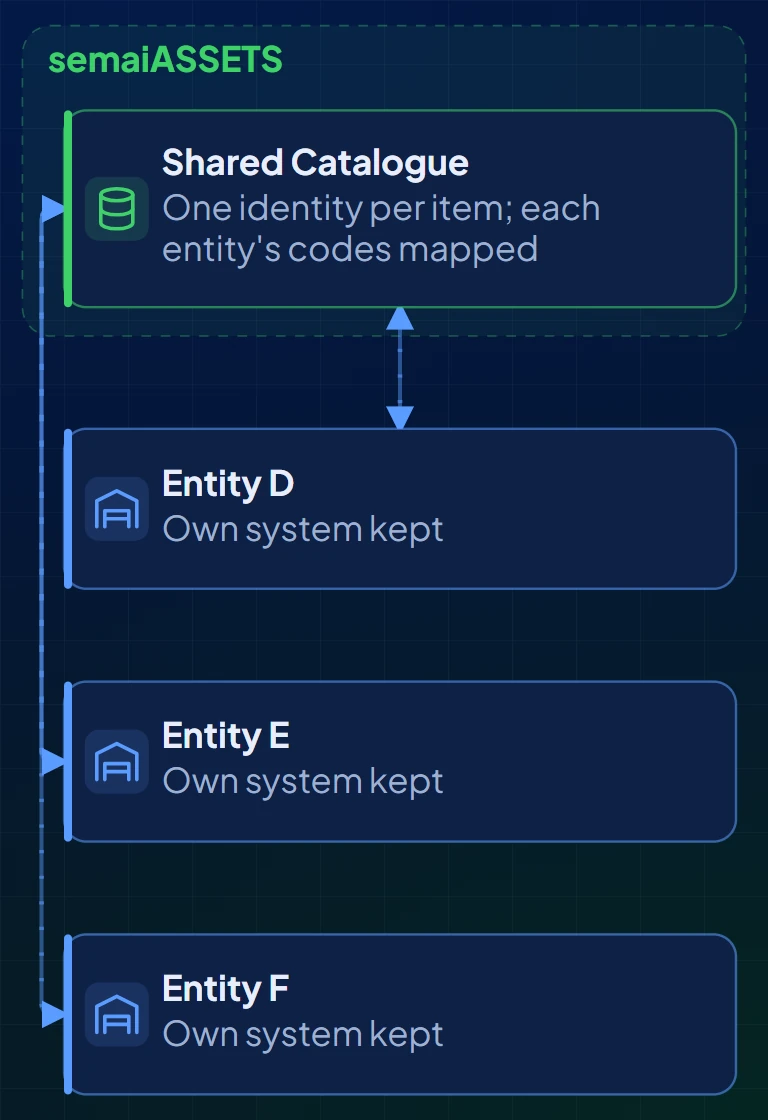
One identity per item, with each entity's own code mapped to it. Every entity keeps its own system, so none has to be replaced to start.
Keeping It Clean
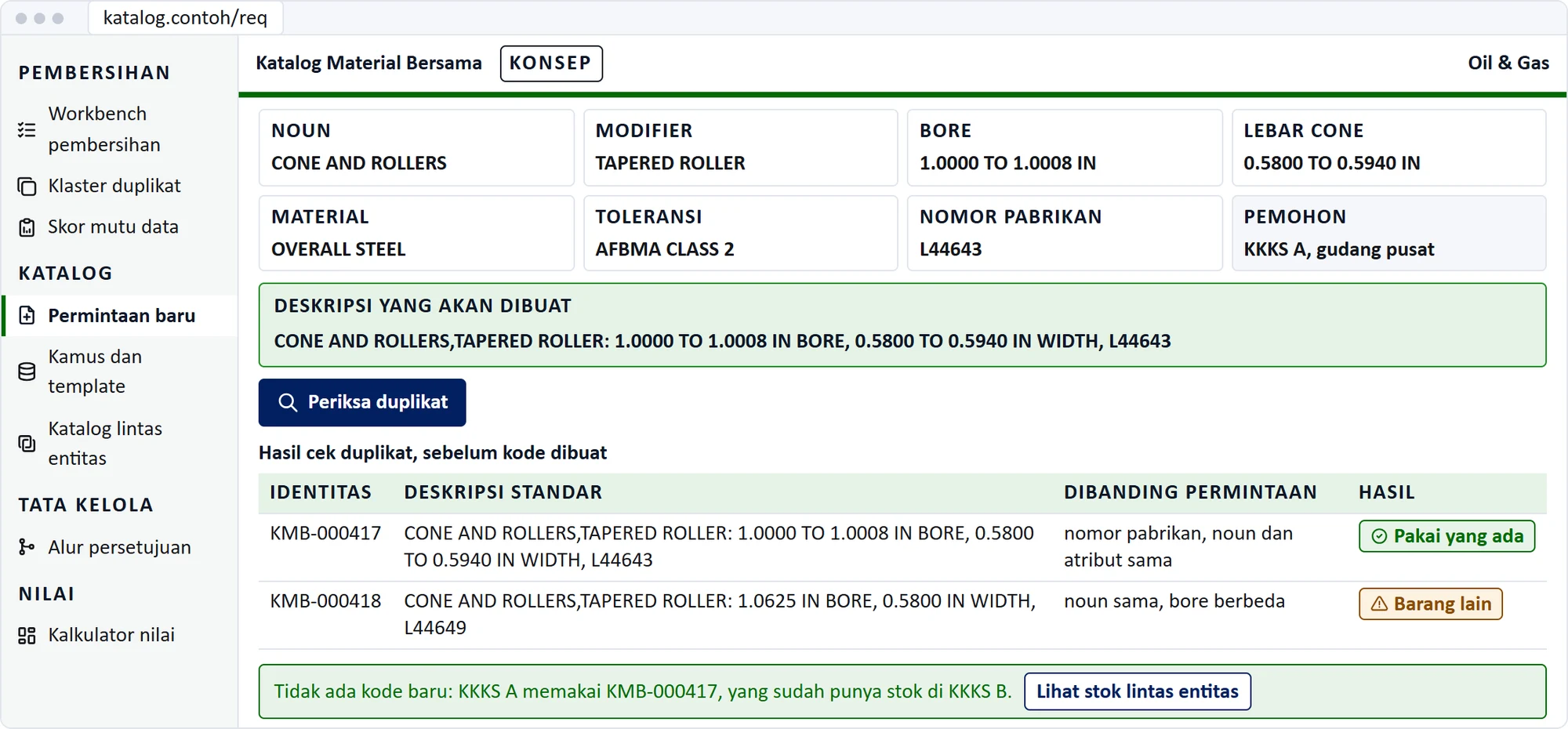
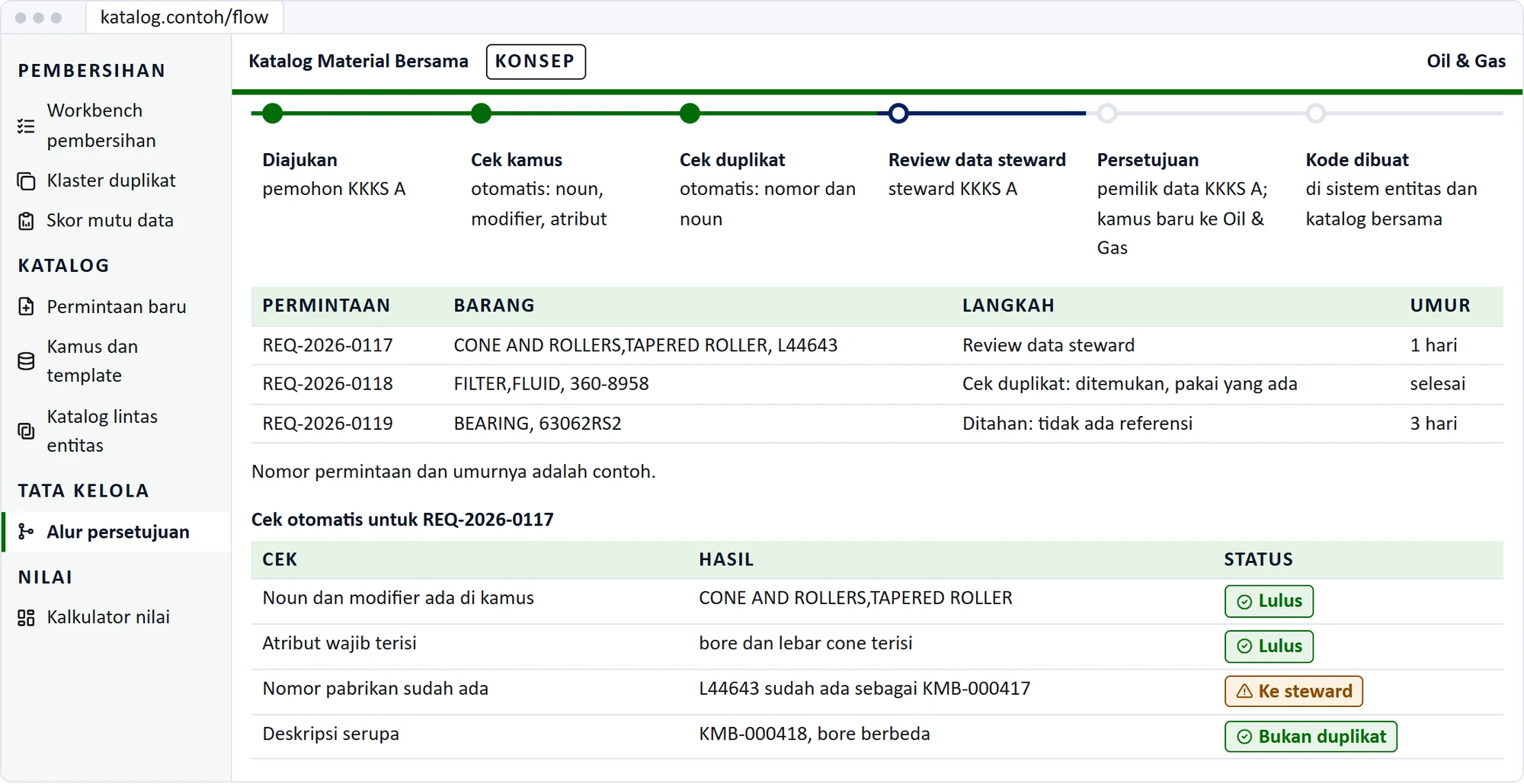
Every new material request passes the template, a duplicate check and an approval flow before a code is created, and data quality is measured the same way every month.
Why semaiASSETS
When each entity writes records its own way, the same item gets different names and different items share one name. The result is double purchases, idle stock, and items that already sit in another entity's warehouse but cannot be seen. Built for groups of entities with many warehouses: Oil & Gas, Mining, BUMD / BUMN.
Same Text, Different Items
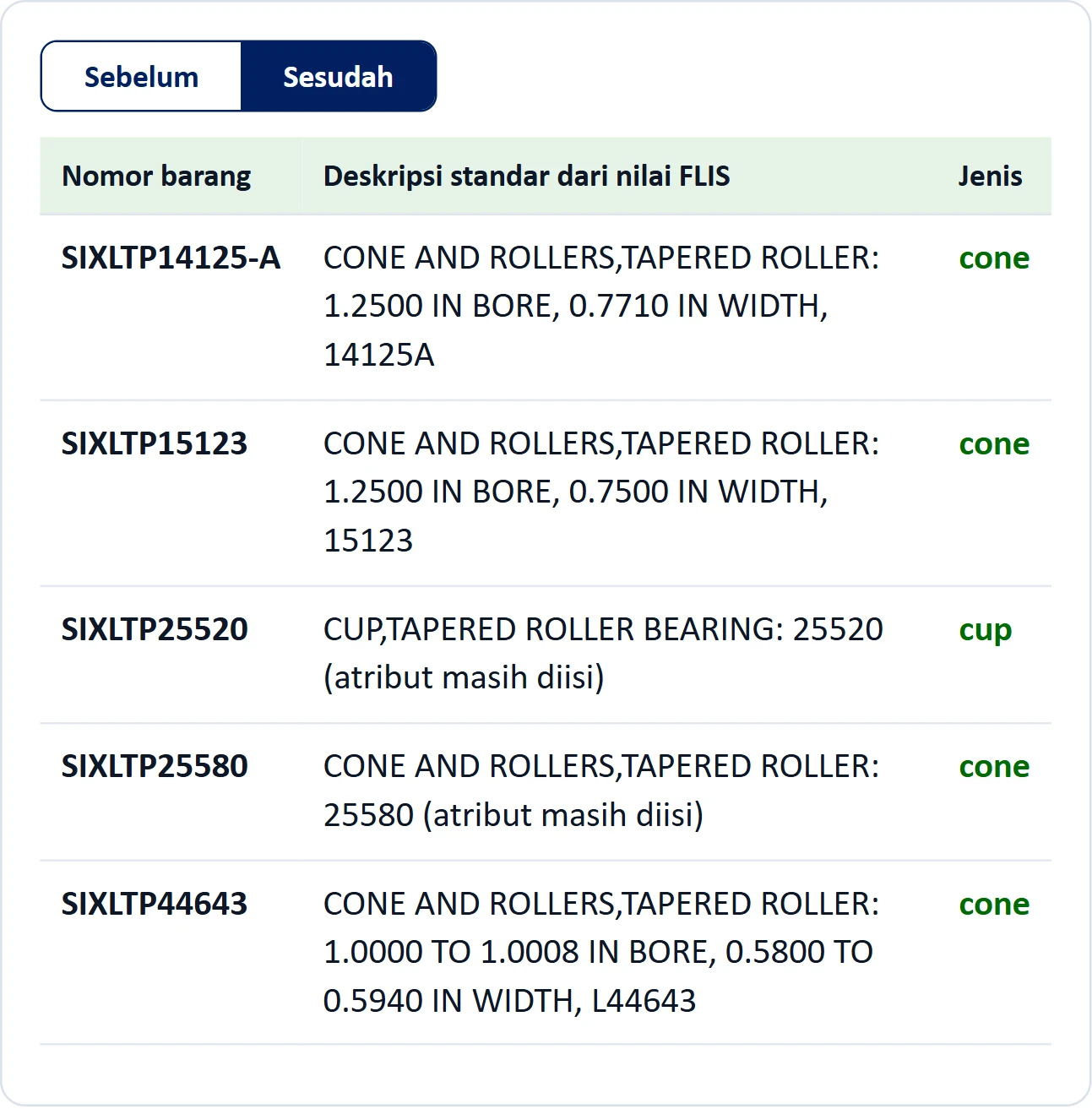
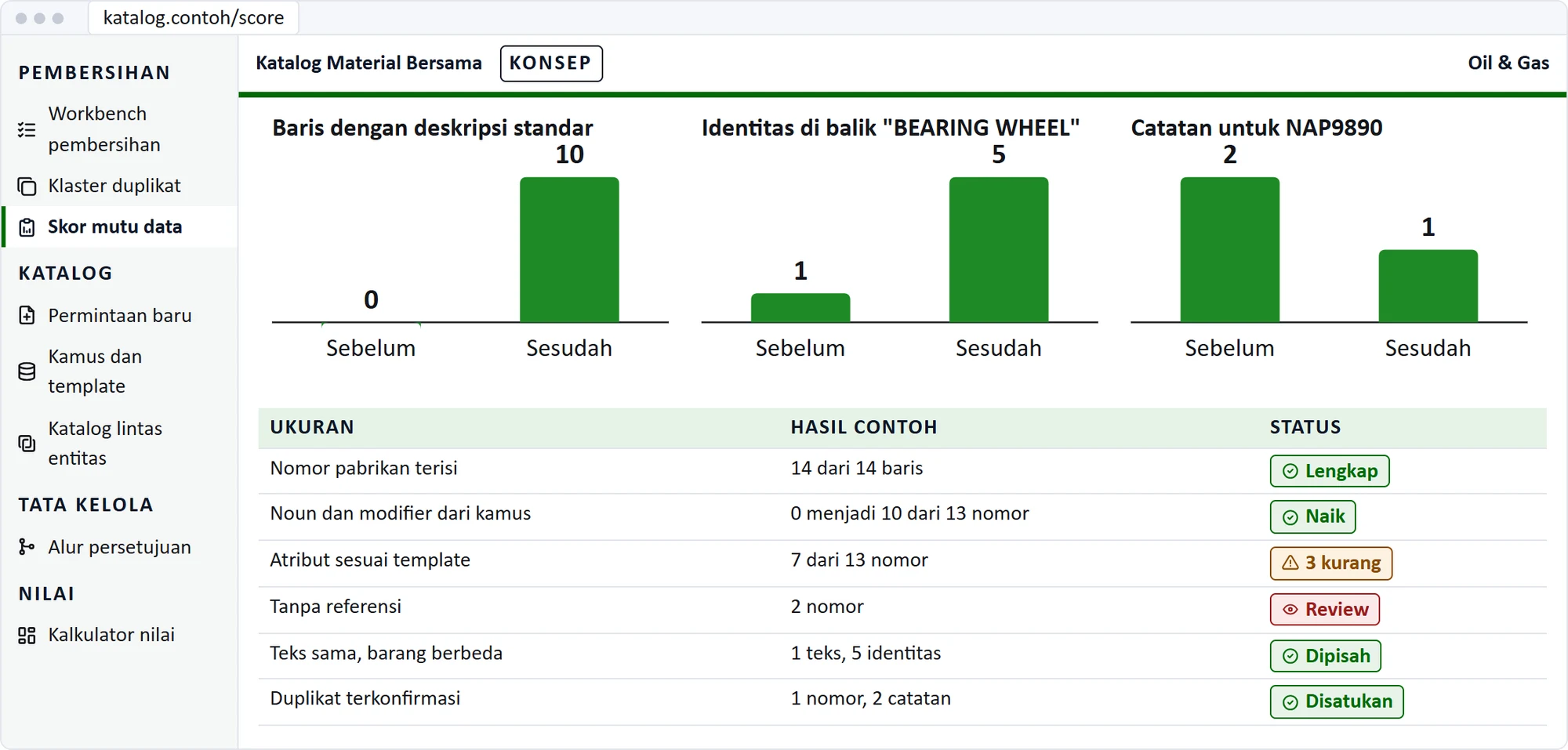
Five lines in a public fleet parts catalogue read BEARING WHEEL. Matched to a reference, they are four cones and one cup. Merging them because the text matches would join different items.
Idle Stock Has a Cost
Items in storage keep costing money: tied-up capital, warehousing, insurance and depreciation, at 12% to 30% of their value a year in the published literature.
Transfers Need One Identity
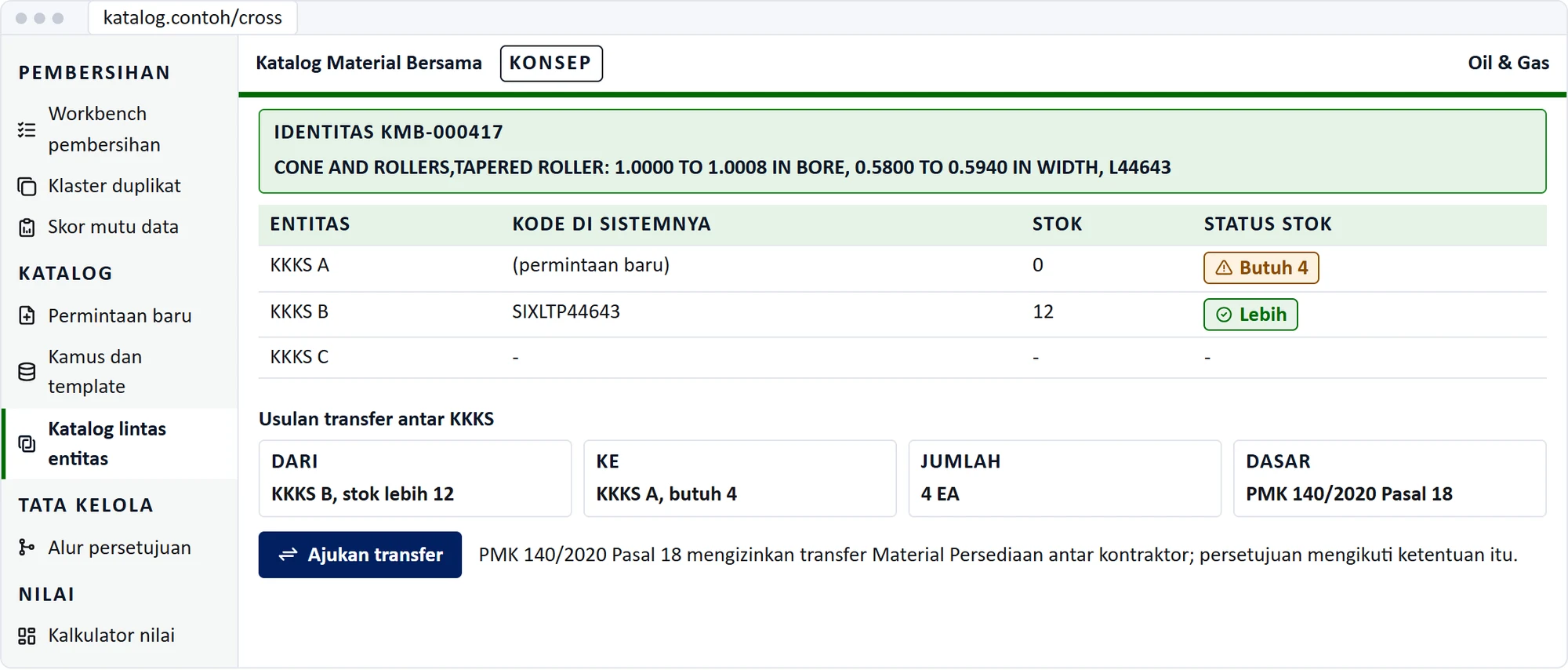
Moving surplus between entities works only when the item in the sender's warehouse and the item the receiver needs read as the same item, even with different codes in two systems.
Many Entities, Many Systems
Entities run different ERPs that will not be merged. A central dictionary with each entity's catalogue and a code map shares the identity of an item, not the system.
How semaiASSETS Works
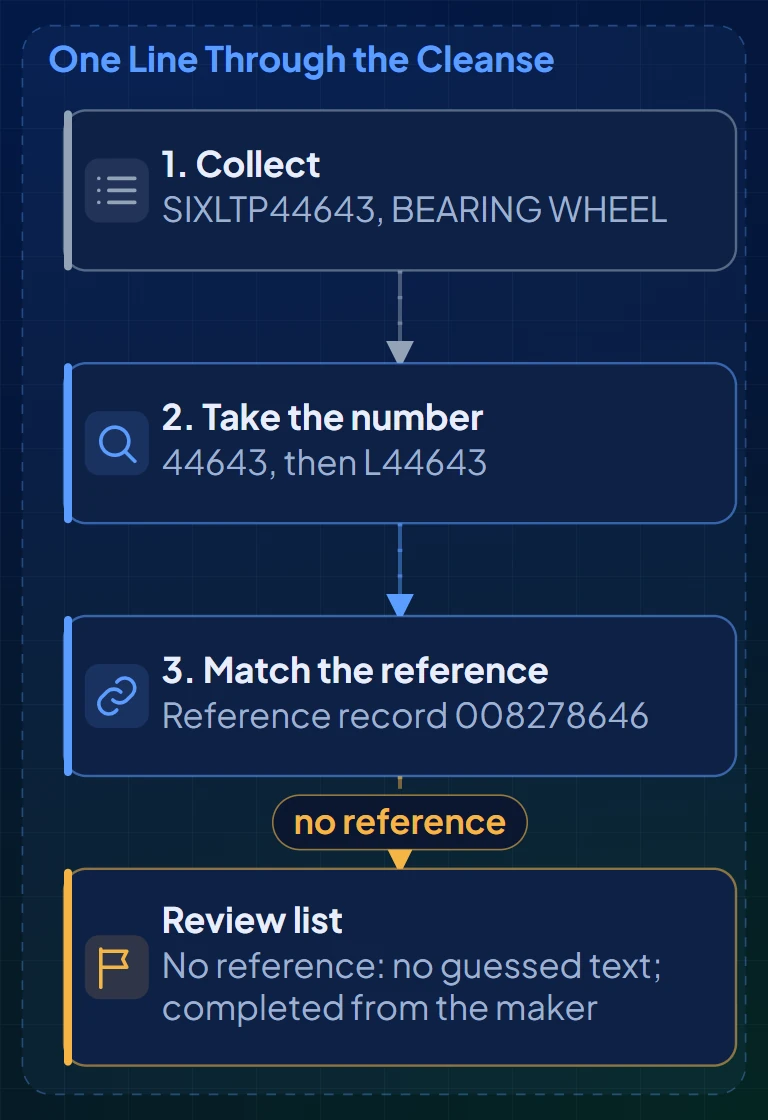
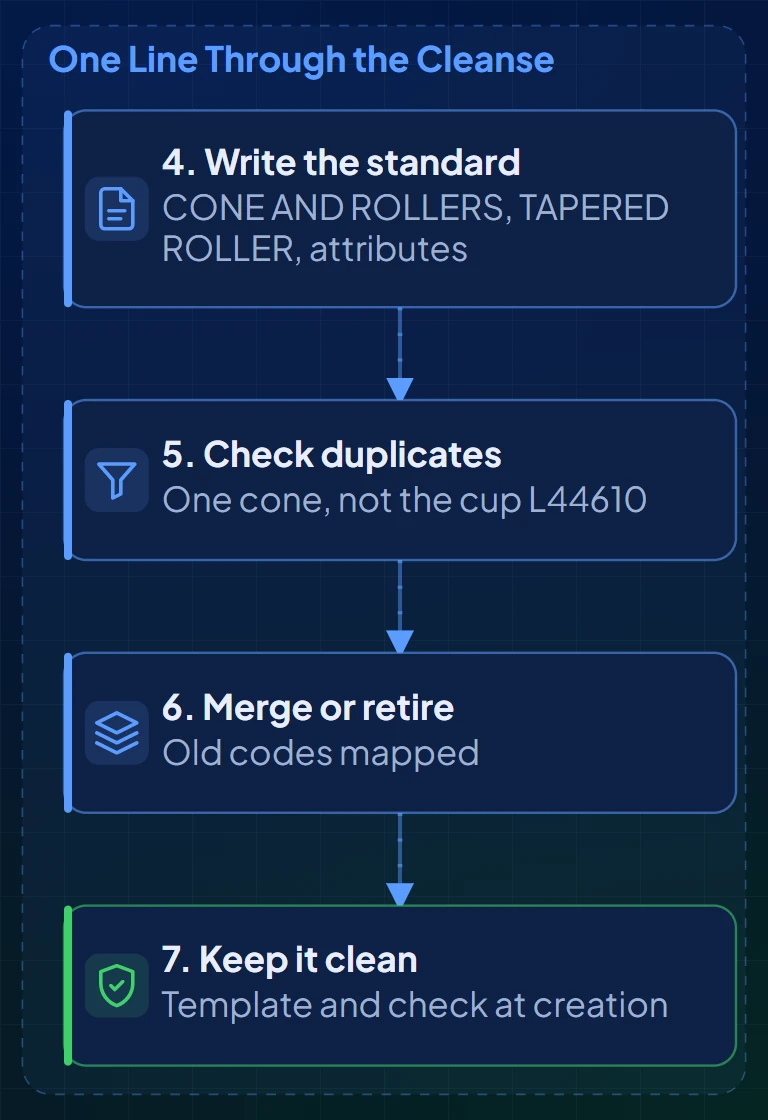
One real catalogue line taken through every step: collect, take the number, match the reference, write the standard, check duplicates, merge or retire, keep it clean. A line without a reference goes to the review list and is completed from the manufacturer. AI proposes; the cataloguer decides.
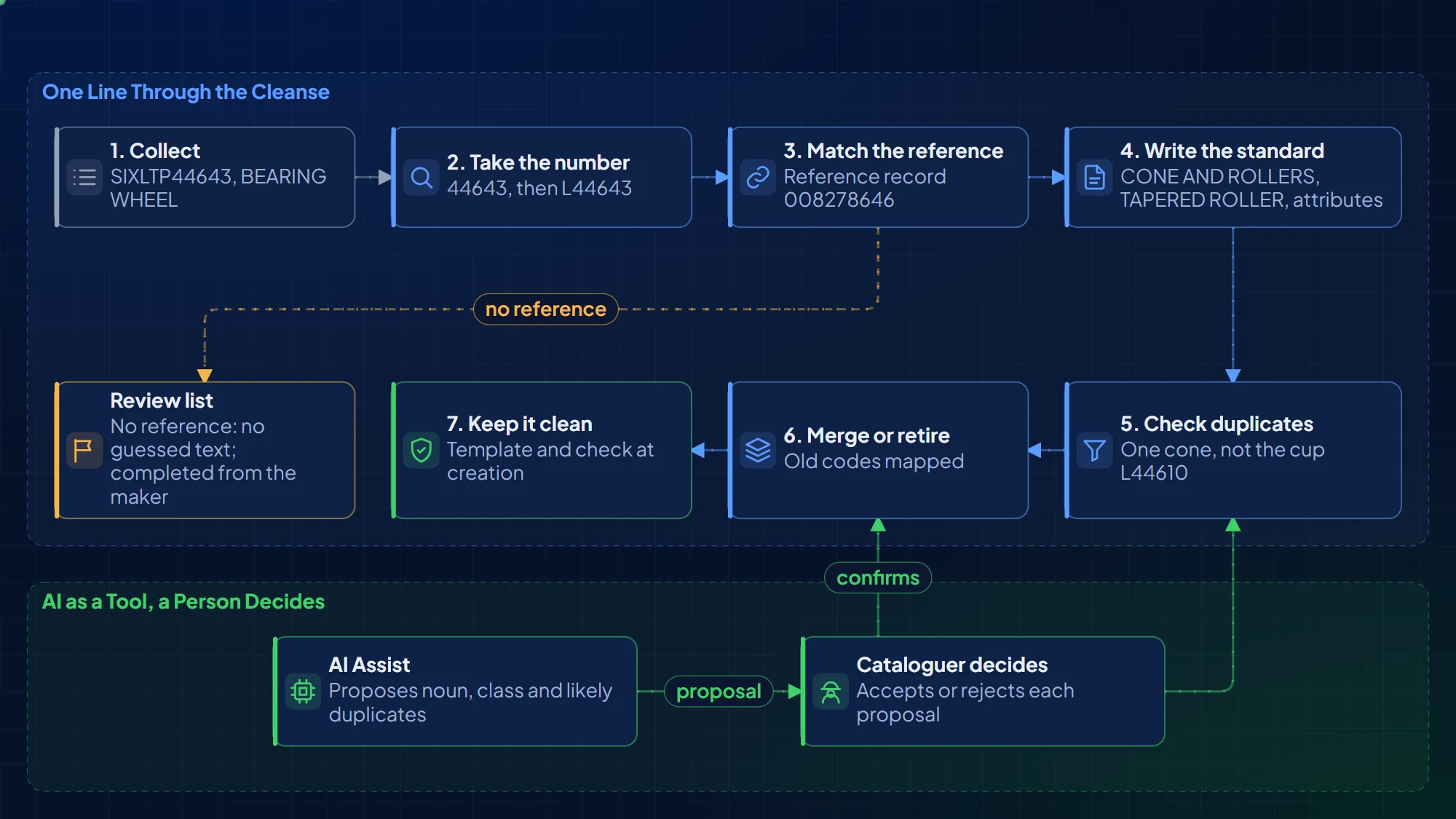
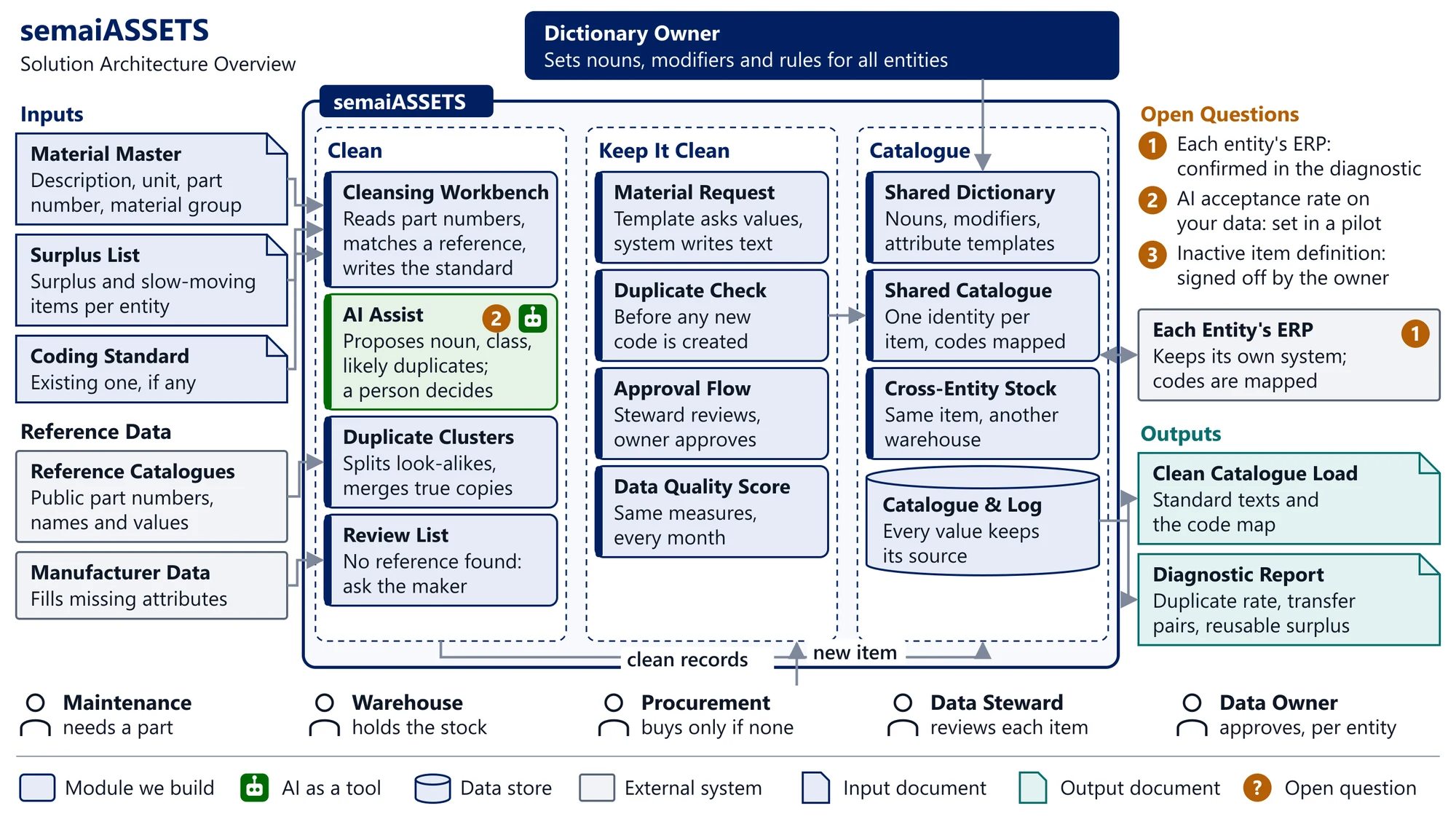
Solution Architecture Overview
The inputs on the left, the modules semaiASSETS adds in the centre (clean, keep it clean, catalogue), each entity's own system and the outputs on the right, the people along the bottom, and the questions still open, each numbered.
For the complete view, open this on a laptop, PC or tablet.
One Catalogue Across Entities
Each entity keeps its own system; its codes are mapped to one identity per item. Surplus in one warehouse is then seen by another entity before anyone buys, and can be transferred or loaned under each entity's rules.
Mockups
Concept screens. The items and their values are real, from a public-domain fleet parts catalogue matched to a public reference catalogue; entities, stock and request numbers are examples. Interface in Bahasa Indonesia.
Let's Build #SmarterEnterprise
Start with: NDA & Joint Planning Workshop